
Zero energy ready home (ZERH) projects are gaining attention among builders and buyers, but real financial and practical hurdles remain. This guide cuts the hype to deliver a fact-based cost and decision framework—so you can confidently decide if ZERH is the right path for your next build, remodel, or purchase.
Key Takeaways
- ZERH homes cost more upfront but often pay back with energy bill savings and substantial federal tax credits (up to $5,000 per home through 2032).
- The biggest hurdles are higher initial outlay, need for specialized trades, and rater availability—especially for complex retrofits.
- Pursue ZERH if you can access credits/incentives and have skilled contractors or raters in your area; otherwise, vet other options like ENERGY STAR or phased upgrades.
- Quick verdict — Is pursuing ZERH worth it for your project?
- What is a ZERH home — performance and baseline features
- Upfront costs (2024) — what adds cost vs a standard home, and how ZERH compares to net zero
- Ongoing costs and expected savings — energy bills, maintenance, and lifecycle view
- Incentives and tax credits — how much of the upfront can be offset (2024–2032)
- Certification process, timeline, and checklist basics (how to certify a home ZERH)
- Common challenges and complaints from builders and homeowners who achieved ZERH
- ZERH vs Net Zero vs ENERGY STAR — what each delivers and when to choose which
- Decision framework — quick checklist for builders, remodelers, and buyers
- Typical cost scenarios and sample ROI signals (illustrative, not prescriptive)
- Resources, next steps, and where to find qualified raters
- Appendix — 8 quick FAQs to answer on the page
Quick verdict — Is pursuing ZERH worth it for your project?
Choosing zero energy ready home (ZERH) certification usually means accepting a slightly higher upfront cost in exchange for much lower monthly energy bills and eligibility for the federal 45L tax credit (up to $5,000 per home, or $1,000 per multifamily unit). Builders and owner-occupants who plan to hold on to the property for years usually benefit most. Rule of thumb: Pursue ZERH if you can claim available incentives and have access to certified raters and skilled trades.
Data point: According to industry research, “monthly energy savings…often greater than the additional mortgage payment,” producing lower overall costs for most ZERH homeowners over the house’s life [source].

What is a ZERH home — performance and baseline features
What is a ZERH home? It’s a new or remodeled house that meets the US Department of Energy’s Zero Energy Ready Home (ZERH) program—meaning it goes far beyond code with a tight building envelope, advanced HVAC and ventilation systems, highly efficient appliances, and rigorous verification by third-party raters. ZERH homes are “ready” for future zero-net energy with renewables (like solar), even if on-site generation isn’t included yet.
Performance: Most ZERH homes target a HERS (Home Energy Rating System) Index in the low to mid-40s, which delivers more than 50% energy savings compared to typical new construction [source].
Core requirements include:
- High-performance insulation and air-sealing, often exceeding ENERGY STAR
- Efficient HVAC and mechanical ventilation (meets or beats IECC standards)
- ENERGY STAR appliances and often advanced water heating
- Room-by-room load calculations and balanced air distribution
- Rigorous third-party testing (blower door, duct leak, commissioning tests)
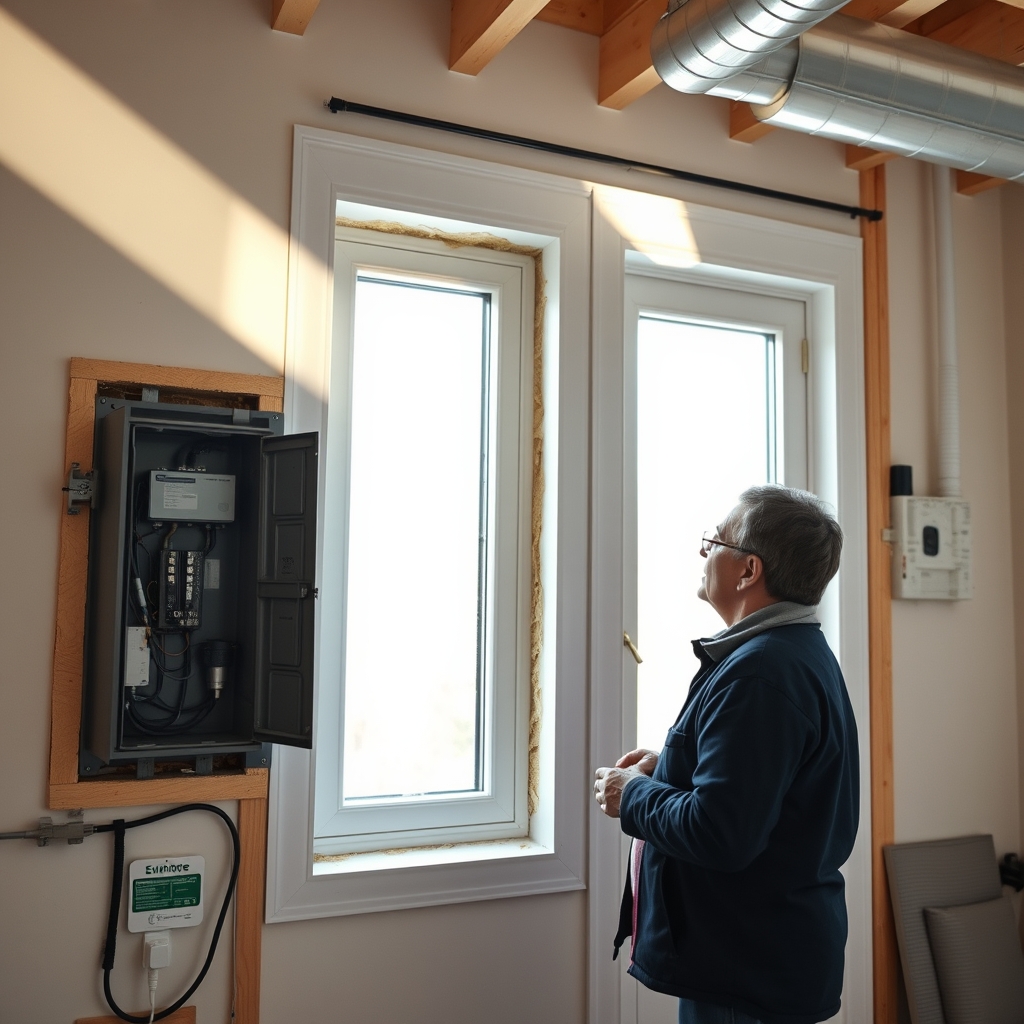
- PV-ready wiring or microinverter prep, so the home can easily add renewables
Upfront costs (2024) — what adds cost vs a standard home, and how ZERH compares to net zero
How much more does zero energy ready home certification cost? Here’s a typical breakdown of extra line items compared to standard new construction:
- Premium insulation and advanced air-sealing
- High-efficiency HVAC and balanced ventilation (often with heat/energy recovery units)
- Upgraded windows and doors
- Commissioning and multiple testing rounds (blower door, ducts, etc.)
- Readiness for solar PV (wiring, microinverter sleeves, roof load allowances)
- Documentation and third-party rating/certification fees
ZERH vs Net Zero: Net zero homes require everything ZERH does—plus the full cost of on-site renewable energy generation (usually solar PV), which can add $10,000–$30,000 extra depending on system size and utility rebates. ZERH homes can “stop short” of actual solar install and still claim many of the savings and credits.
Reference: ZERH generally incurs higher initial costs than ENERGY STAR; net zero adds even more for renewables [source].
Ongoing costs and expected savings — energy bills, maintenance, and lifecycle view
The promise of zero energy ready home (ZERH) is proven at the utility meter. Real-world ZERH homes report monthly savings often exceeding any added mortgage payment due to substantially reduced heating, cooling, and electricity usage.
Maintenance can differ: advanced equipment (HRVs, ERVs, high-performance HVAC) may cost more to service, but with fewer on-cycle hours and longer lifespans. Total cost of ownership tilts in ZERH’s favor if energy rates are moderate to high, and the home will be owner-occupied for 5 years or more.
Over the house’s lifetime, ROI comes from:
- Lower or near-zero energy bills
- Increased comfort and air quality (may impact resale value)
- Possible higher resale price due to efficiency and healthy home certification
Reference: “Monthly energy savings…often greater than the additional mortgage payment” [source].
Incentives and tax credits — how much of the upfront can be offset (2024–2032)
The single biggest economic driver for zero energy ready home certification in 2024 is the federal 45L tax credit—amended under the Inflation Reduction Act and extended through 2032:
- Single family ZERH: up to $5,000 per home
- ZERH multifamily: $1,000 per qualifying unit
- ENERGY STAR certified single family: $2,500 per home alternative
These credits are available to builders on qualifying projects. Some states and utilities stack additional incentives on top, but you should confirm those locally.
Tip: Calculate your effective payback by subtracting credits from your incremental ZERH build cost—and factor in projected monthly energy savings for your market.
For more details visit: RESNET ZERH overview
Related: If you are interested in more smart home upgrades that can increase value, see Build a Smarter Home.
Certification process, timeline, and checklist basics (how to certify a home ZERH)
- Hire a Home Certification Organization (HCO): e.g., RESNET.
- Design phase: Integrate DOE zero energy ready home checklist requirements at the plan stage.
- Pre-construction rater engagement: Certified rater reviews/approves specs.
- Construction: Build to high-performance standards—addressing envelope, HVAC, ventilation, appliances, and PV readiness.
- Testing and verification: Third-party rater completes blower door, duct leakage, and other required tests at critical stages.
- Documentation and reporting: Submit all checklist items and commissioned test data to HCO for approval.
- Homeowner handover: Provide the DOE ZERH-compliant homeowner manual covering systems, warranties, and best practices.
Timeline: Certification can add 2–6 weeks, mainly depending on rater scheduling and paperwork turnaround. Limited rater availability can cause longer delays in busy markets [DOE resource].
For checklists and more, review the NEEP ZERH Resource Guide.
For pros and DIYers interested in easier home upgrades, read about Peel and Stick Wall Decals for quick transformations.
Common challenges and complaints from builders and homeowners who achieved ZERH
- High initial outlay: Even after incentives, upfront costs are substantial compared to code-minimum builds.
- Specialized labor shortage: Skilled trades and certified raters are in short supply, leading to scheduling delays and higher costs.
- Design expertise required: Mistakes early in the spec/design phase can be expensive to correct later.
- Certification timeline risks: More steps, more coordination, and more tests mean approval can drag on weeks or longer if local capacity is limited.
- Retrofit difficulty: Applying ZERH in older homes can be prohibitively expensive and complex—expect higher labor and disruption costs.
Industry surveys consistently report these as the main barriers—even experienced production builders flag the “labor shortage” and “rater availability” as gating factors [DOE Newsletter].
For an honest, experience-based approach to smart home setups, see our Smart Plug Home Automation Guide.
ZERH vs Net Zero vs ENERGY STAR — what each delivers and when to choose which
| Feature | ENERGY STAR | ZERH | Net Zero |
|---|---|---|---|
| Performance Target (HERS Index) | 55–70 | Low–mid 40s | 0 (net export or offset) |
| Upfront Cost | Low | Moderate | High (adds cost of PV/renewables) |
| Federal Tax Credit (single family) | $2,500 | $5,000 | $5,000 (if also ZERH-certified) |
| Typical Buyer Appeal | Broad (code plus) | Efficiency, health, best for long-term | Green buyers, long payback |
| Certification Process | Simple, most raters available | Stricter, rater availability varies | Complex (ZERH + PV + more) |
When is ZERH optimal? When you want maximum efficiency and comfort, plan to own long-term, local raters are available, and you want to claim the highest federal incentive. For spec homes and fast-turn projects, ENERGY STAR offers a lower bar. Net zero is only justified if buyers demand it or if local incentives make the added PV cost pay back quickly.

Decision framework — quick checklist for builders, remodelers, and buyers
- Are you building new, gut remodeling, or retrofitting? (ZERH is easier for new or comprehensive remodels)
- Can you absorb a 4–8% upfront cost premium (after incentives) for better efficiency/features?
- Is there a RESNET or similar DOE zero energy ready home checklist rater working in your locality?
- Will you (as builder or buyer) meet the requirements and secure the 45L tax credit before 2032?
- If retrofitting: do expected savings offset costs or would staged upgrades be smarter?
- Is your expected ownership or holding period at least 5 years?
If you answer “yes” to most, ZERH is a solid choice. If your local market is thin for skilled labor/raters or incentives are unavailable, consider ENERGY STAR or lower-bar efficiency strategies for now.
For other smart decisions to boost home value, check out our Programmable Pet Feeder Review.
Typical cost scenarios and sample ROI signals (illustrative, not prescriptive)
Scenario 1: Production New-Build Single Family
- Incremental cost: $6,000–$14,000 above baseline
- Credits: $5,000 (45L, minus design/certification fees)
- Expected energy savings: $70–$150/month (varies by region and rates)
- Payback guide: Positive cash flow if holding period >5 years, especially in high-rate utility markets
Scenario 2: Multifamily Development
- Incremental cost/unit: $3,000–$5,000
- Credits: $1,000/unit
- Savings: Lower utility costs add to marketability for builders and lower ongoing expenses for tenants or owners
Scenario 3: Deep Retrofit of Existing Home
- Incremental cost: $30,000+
- Credits: $5,000 if federal incentives still available and all ZERH requirements can be met
- Key risk: Complex upgrades, disruptive work, and higher cost/uncertainty (ZERH rarely pursued unless part of gut renovation or historic high-energy-use home)
To create your own ROI estimate, gather:
- Your incremental build cost (above local code)
- Expected annual energy savings (ask your rater for modeled projections)
- Local utility rates
- Which incentives (45L, utility, state) you can claim
Resources:
Comprehensive ZERH Builder Guide
Thinking of other performance upgrades? See Best In-Wall Smart Outlet Solutions for an easy home efficiency win.
Resources, next steps, and where to find qualified raters
-
DOE Efficient New Homes Program Hub: Full ZERH resources, videos, and certified home tours, at
energy.gov ZERH. -
RESNET/PCA Directory: Find a certified ZERH rater at
RESNET ZERH Directory. - DOE zero energy ready home checklist: Download and integrate into your initial project scope and design review process.
- Local utility & state programs: Check with your state energy office and utility for stacking rebates and equipment buy-downs.
-
First 90-Day Action Plan:
- 30 Days: Vet and engage your HCO/rater
- 60 Days: Lock down available incentives in writing and integrate ZERH checklist with design team
- 90 Days: Confirm construction timeline, rater schedules, and plan documentation
For an easy, renter-friendly home improvement, see our Smart Plug Review.
Appendix — 8 quick FAQs to answer on the page
Is a Zero Energy Ready Home the same as a net zero home?
No. ZERH homes are built “ready” for zero (ultra-efficient, solar-ready) but do not require on-site renewables to be certified. Net zero homes include both high performance and on-site generation for true annual zero utility use.
How long until I recoup the upfront premium for ZERH?
Modeling shows most ZERH owners recoup incremental costs in 5–10 years, especially where energy rates are moderate to high and monthly savings can exceed the added mortgage payment. Incentives like the 45L tax credit can accelerate payback.
Is retrofitting an existing home to ZERH standards realistic?
It’s challenging and costly. Deep retrofits can require extensive insulation, air sealing, and new mechanical systems, resulting in costs often above $30,000. Generally, new projects or gut remodels are more practical ZERH candidates.
How hard is it to find a qualified ZERH rater?
Availability varies widely by region. Some markets have multiple RESNET-certified raters, others very few or none for ZERH. Start your rater search early to prevent project delays.
What does the ZERH homeowner manual include?
System specs, warranties, operation/maintenance instructions, efficiency features, and actions to preserve performance over time—all required by DOE ZERH checklist.
Which certification has the shortest payback: ENERGY STAR, ZERH, or net zero?
ENERGY STAR typically has the shortest payback due to the lowest upfront cost; ZERH pays back in most markets if incentives can be claimed; net zero has the longest due to solar/PV costs.
If I install solar later, does my ZERH home become net zero?
Yes, if the on-site renewables offset your annual energy use, your ZERH home effectively becomes net zero—this is the official design intent of ZERH standards.
Can I combine other smart/green upgrades with ZERH for added ROI?
Absolutely. Smart thermostats, additional water efficiency, and durable finishes can enhance comfort and lower maintenance even further. Also consider indoor air quality upgrades, which are already a ZERH requirement.
Conclusion
Zero energy ready home (ZERH) projects are not cheap or simple—expect higher upfront cost, planning demands, and challenges finding qualified expertise. However, when you do the math—including the federal incentives and lifetime energy savings—the value is compelling for owner-occupants and builders who can access experienced raters. Ready to take the next step or need help mapping your project? Download the DOE checklist, talk to a local rater, and begin your ZERH journey today.